
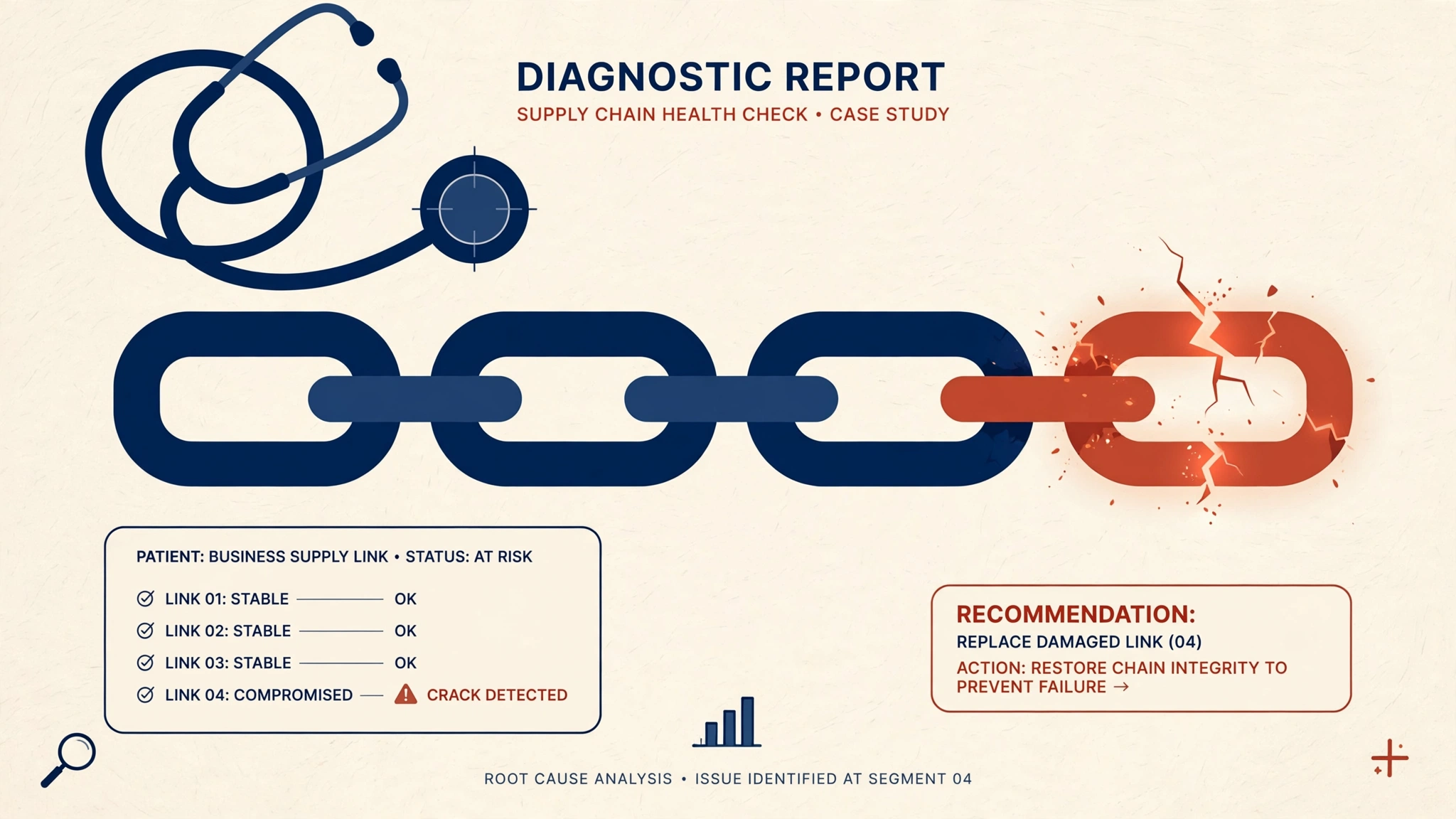
Leaders rarely start with "our Cadence is weak." They start with a symptom: deadlines keep slipping, the same issue returns to the agenda, two teams build conflicting versions of the same thing. The useful question is which underlying cause is producing it.
Jim Marsh, author of Culture OS and Managing Principal of JEM Premier Coaching, has publicly described four elements of execution: Clarity, Choices, Commitment, and Cadence. This article reverses the usual direction and starts from symptoms. The symptom-to-cause pairings are practical hypotheses written for this article. They are starting points for investigation, not diagnoses from the book, and a symptom can have more than one cause.
Symptom: the team is busy, but results feel scattered
Likely place to look: Clarity. If people are working hard on different things, they may hold different pictures of the priorities. Ask each person to write the top three priorities and what comes fourth. If the lists differ, you have found a gap. Also check whether tradeoffs were named. A list with no stated "stop or delay" items invites everyone to choose their own.
Symptom: the same issue returns to the agenda every week
Likely place to look: Choices. A recurring item often means nobody owns the decision, no deadline exists, or the decision was made and not recorded. Ask: who decides this, by when, and what happens if they cannot? If three people give three answers, the decision rights are unclear. If the answer is "we decided last month," check whether the decision was captured where people can find it.
Symptom: promises made in meetings are not kept
Likely place to look: Commitment. Look at how commitments are made. Is there one named person per item? Is there a date? Can others see it? Does a missed item get renegotiated openly, or does it drift? A team that agrees in the room and delivers inconsistently often has agreements that sound clear but are not recorded or visible.
Symptom: good practices start strong and fade within weeks
Likely place to look: Cadence. A new practice needs a recurring moment where someone asks about it. Ask: is there a regular review of this practice? Do leaders coach on it? Is good use noticed? Is drift addressed early? If the practice depends on one enthusiastic person, it has no cadence behind it.
Symptom: cross-team work keeps colliding
Likely place to look: Clarity and Choices together. Teams that collide usually have either conflicting priorities (Clarity) or an unresolved decision about who leads (Choices). Ask the two team leads to describe the shared outcome and the decision rights separately. Mismatches show which one is the issue.
Symptom: people are surprised by problems late
Likely place to look: Commitment and Cadence. Late surprises often mean that status is invisible or that people do not feel safe flagging risk early. Check whether the team has a normal way to mark an item at risk, and whether the response to bad news encourages the next person to speak up.
A fast scoring exercise
Pick one live initiative. Give each C a rating of strong, partial, or missing, using three observable checks per C:
- Clarity: Everyone can state the outcome, and the tradeoff was named.
- Choices: Open decisions have an owner, a date, and an escalation route.
- Commitment: Open actions have one owner, a date, and are visible to peers.
- Cadence: A recurring review exists, and coaching, recognition, and correction occur between reviews.
Ask three team members to score independently, then compare. Disagreement about the rating is useful data, because it shows where experience differs across the team.
Fix the weakest link first
Resist repairing all four at once. Work on the weakest C for four weeks, then rescore. If you would like outside facilitation, JEM's Culture-to-Execution Sprint is a 12-week engagement for intact teams working on one live execution problem, and a look at Jim's background explains the operator's perspective behind it.